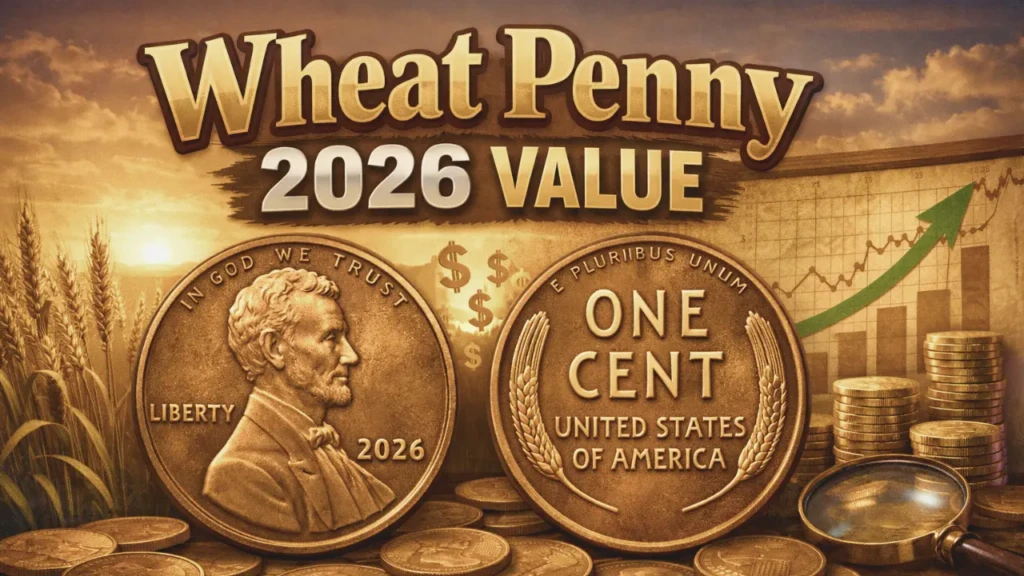
The Wheat Penny 2026 price refers to the projected market value of Lincoln Wheat Pennies among collectors, dealers, and investors in 2026. The Wheat Penny is an American one-cent coin minted from 1909 to 1958, and even though production ceased nearly seven decades ago, these coins still command considerable attention. In 2026, Wheat Penny prices will depend on their condition, rarity, mint mark, and collector demand, with common dates still fetching more than face value and rare coins commanding significantly higher prices.
Why are Wheat Pennies valuable?
Wheat Pennies are valuable because they represent a significant period in American numismatic history. These coins were the first to feature Lincoln’s portrait on the obverse, commemorating Abraham Lincoln’s 100th birthday. The reverse design, featuring two stalks of wheat, gave the coin its “Wheat Penny” nickname. Approximately 29 billion Wheat Pennies were minted in total, but relatively few survive in good condition. Their historical significance and the challenge of completing a set of all dates and mint marks maintain collector interest.
How does condition affect value?
Condition is the most crucial factor in determining the Wheat Penny 2026 price. Coins are graded from Poor (P-1) to Mint State (MS-70). A common 1943 copper Wheat Penny in poor condition might be worth a few dollars, while the same coin in perfect MS-65 condition could sell for several thousand dollars. The difference between grades such as Fine (F-12), Extremely Fine (EF-40), and Uncirculated (MS) significantly impacts value, often increasing it tenfold or more with each grade increment.
Key Dates that Increase Value
Certain key dates significantly increase the value of Wheat Pennies. Examples include the 1909-S VDB, 1914-D, and 1922 No-D varieties. While these are specific to 2026, prices fluctuate with auction results and dealer pricing, but the general range for key dates in good condition can exceed $1,000. For example, a 1909-S VDB in Very Fine condition might fetch over $1,500, while a perfect MS-65 coin could command over $20,000. These rare dates are the backbone of a Wheat Penny collection.
The Importance of Mint Marks
Mint marks such as S (San Francisco), D (Denver), and no mark (Philadelphia) indicate where the coin was minted and are crucial to value. In 2026 markets, coins from lower-production mints like San Francisco often command higher prices. For example, a 1931-S Wheat Penny in mid-grade condition might be worth several hundred dollars, while its Philadelphia counterpart could be worth less than $50. Collectors aiming for complete sets should pay close attention to the distribution and scarcity of mint marks.
The 1943 Wheat Penny: A Special Case
The 1943 Wheat Penny comes in both steel and copper varieties, and this distinction significantly impacts 2026 values. Most 1943 coins were minted in zinc-coated steel due to wartime copper shortages, and these are common but still worth more than face value, often a few dollars in good condition. The rare 1943 copper coin, struck in error, can be worth tens of thousands of dollars, especially if certified by a grading service. In recent years, a 1943 copper Wheat Penny sold for over $1.7 million, demonstrating just how valuable rare variations can be.
Price Trends in 2026
In 2026, Wheat Penny prices continue their long-term upward trend due to strong interest from both new and experienced collectors. Inflation in precious metals and growth in the general coin market have pushed prices even higher than a decade ago. Major auction data consistently shows increases, especially for high-grade and rare examples. Even common dates in uncirculated grades have seen significant appreciation, reflecting broader trends in the collectible coin market.
How to Determine the Value of Your Wheat Penny
To estimate the value of your Wheat Penny in 2026, first identify the date and mint mark, then examine its condition under good lighting. Compare it to recent auction results and dealer price lists, or have the coin certified by a third-party grading service such as PCGS or NGC. Certified coins typically command higher prices, especially those graded MS-63 and above. For casual collectors, catalogs and online resources can help estimate value before selling or insuring your coins.
Where People Sell Wheat Pennies
Collectors and sellers utilize several avenues to trade Wheat Pennies in 2026, including online marketplaces, coin shops, auctions, and coin shows. eBay remains a popular option for individual sales, but reputable auction houses can better handle higher-value coins and provide verified sales prices that influence market trends. Local coin dealers offer quick transactions, although prices may be lower than retail. Understanding current market conditions helps sellers choose the best platform to maximize value.

Future Outlook for Wheat Penny Values
Looking ahead, Wheat Penny values in 2026 are expected to remain strong or increase as collectors continue to assemble complete type and date sets. Population reports indicate that only a limited number of high-grade examples exist, maintaining scarcity value. As older collectors pass on their collections and new enthusiasts enter the market, demand dynamics could further drive up prices. While common dates may not see dramatic price increases, rare dates and high-grade examples are likely to experience continued appreciation.