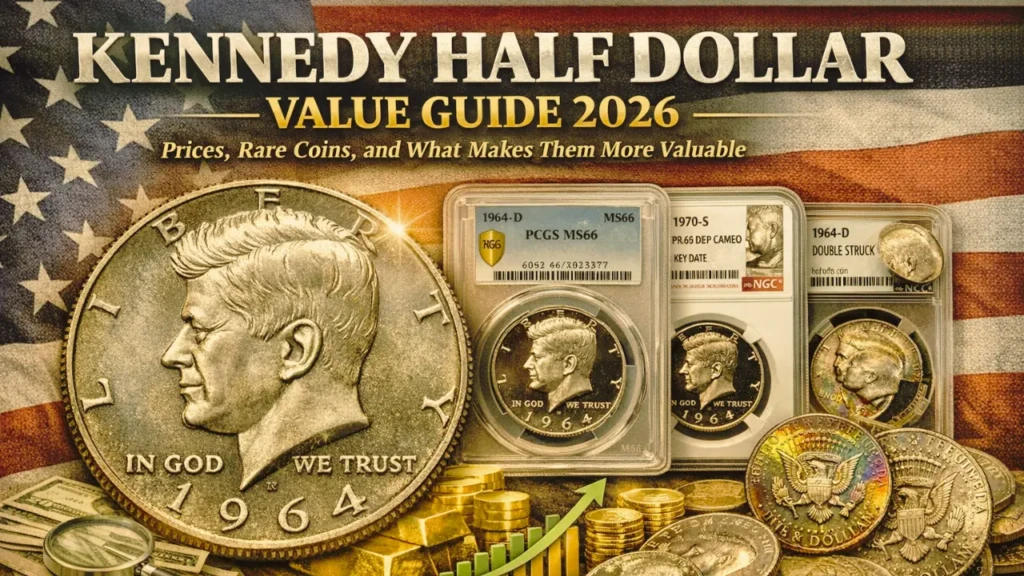
Kennedy Half Dollar Value Guide 2026 | The value of a Kennedy half dollar depends primarily on the coin’s year, mint mark, metal composition, condition, and collector demand. First issued in 1964 in honor of President John F. Kennedy, this coin is one of the most popular U.S. half dollars ever minted. Millions of pieces were produced, yet over the years, silver versions and well-preserved examples can command substantial prices. While many Kennedy half dollars still trade near face value, others can sell for tens, hundreds, or even thousands of dollars in the collector market.
Understanding value begins with understanding that not all Kennedy half dollars are the same. Early issues contain silver, later ones are mostly copper-nickel, and special editions exist for collectors. Due to these variations, the price range is wide. A basic circulated coin can cost anywhere from $0.50 to $1, while a rare proof or high-grade silver example can fetch a significant premium.
The History Behind the Kennedy Half Dollar
The Kennedy Half Dollar debuted in 1964, just months after President Kennedy’s assassination. The U.S. Mint produced this coin quickly, and demand was extremely high. Over 400 million coins were produced in that first year alone. Initially, this coin was composed of 90% silver, the same as traditional U.S. silver coins of the time.
From 1965 to 1970, the silver content was reduced to 40%, and after 1971, silver was removed from regular circulation strikes. This change plays a major role in determining the value of the Kennedy Half Dollar today. Coins with a higher silver content naturally have a higher face value, even before considering collector premiums.
Silver Content and Its Effect on Value
Silver content is the biggest factor affecting the value of a Kennedy half dollar. The melting point alone often exceeds the face value for the silver version. 1964 coins contain approximately 0.3617 troy ounces of silver. 1965–1970 coins contain approximately 0.1479 troy ounces of silver.
Coins struck after 1971 contain no silver.
When silver prices rise, the value floor for these coins also rises. For example, if silver trades at approximately $25 per ounce, the melt value of a 1964 Kennedy half dollar is approximately $9. This does not include any collectible premiums, which can increase prices for pieces in better condition.
Kennedy Half Dollar Values by Type
Below is a general value snapshot based on typical market ranges. Actual prices may vary depending on condition and demand.
| Coin Type | Silver Content | Typical Value Range |
|---|---|---|
| 1964 Kennedy Half Dollar | 90% Silver | $8 – $25 |
| 1965–1970 Kennedy Half Dollar | 40% Silver | $4 – $10 |
| 1971–Present Circulated | None | $0.50 – $1 |
| Proof Silver Editions | Varies | $10 – $40 |
| High-Grade Mint State Coins | Varies | $20 – $1,000+ |
These ranges reflect general retail market observations rather than fixed prices.
Rare and High-Value Kennedy Half Dollars
Some Kennedy half dollars stand out beyond the normal price range. Coins with errors, special finishes, or very high grades are particularly sought after. The 1964 Special Mint Set (SMS) Kennedy half dollar is one of the most valuable varieties. Due to their rarity, genuine coins can sell for thousands of dollars.
High-grade 1964 Proof coins with deep cameo contrast can also sell for several hundred dollars. Another special item is the 1970-D Kennedy half dollar, which was never released for general circulation and was only included in mint sets. Collectors are willing to pay a hefty premium for these rare pieces because supply is limited and demand is steady.
How Condition Affects the Value of a Kennedy Half Dollar
Condition is graded on a scale from Poor (P-1) to Mint State (MS-70). Small differences in grade can mean significant differences in price. A worn 1964 coin can sell for close to its melt value. The same coin, in mint condition with sharp details and full luster, can fetch several times more. Proof coins with a glass-like surface and no visible flaws are more valuable than coins with tarnish or scratches. Professional grading by a service like PCGS or NGC often increases buyer confidence and market value.
Proof Coins vs. Circulation Coins
Proof Kennedy half dollars are produced specifically for collectors using polished dies and planchets. They feature sharp details and a mirror-like background. Proofs are generally more valuable than circulation coins of the same year, especially if they contain silver. However, proof coins are not inherently rare. Millions of coins are minted in a few years, which doesn’t cause prices to rise significantly. Nevertheless, well-preserved proof coins remain popular and often sell in the $10 to $40 range, depending on their silver content and condition.

Where to Buy and Sell Kennedy Half Dollars
Most Kennedy half dollars are sold through coin shops, online marketplaces, auctions, and collector forums. Prices may vary slightly across platforms due to fees and demand levels. Local coin dealers often offer slightly less than the retail price, while selling directly to a collector can yield a higher return. Auction houses are best for rare or high-grade coins, where competitive bidding can drive prices up.
How to Estimate Your Coin’s Value
Start by identifying the year and mint mark. Next, see if it contains silver. Then, carefully examine its condition in good lighting. Comparing similar coins that have sold recently is more beneficial than simply looking at asking prices. Grading guides and collector references can also help narrow realistic expectations. If a coin appears rare or unusually well-preserved, a professional appraisal may be beneficial.
Future Price Estimates for the Kennedy Half Dollar
The Kennedy half dollar benefits from its historical significance and continued collector interest. The silver content provides a built-in value base, while rarer varieties have the potential for long-term appreciation. As good-quality vintage coins become less common, the premium for well-preserved coins is likely to gradually increase. While not every Kennedy half dollar will be valuable, carefully selected coins may remain or increase in value over time.