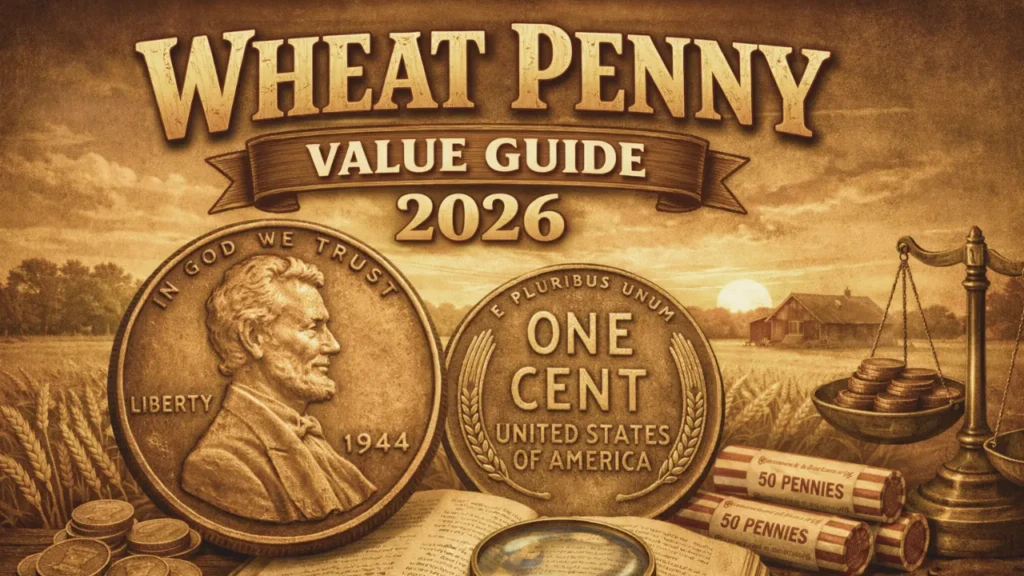
Wheat Penny Value Guide 2026: Wheat penny value refers to how valuable a Lincoln Wheat Cent is to collectors and investors, and this varies greatly depending on the year, mint mark, and condition. These pennies were minted by the United States from 1909 to 1958 and are instantly recognizable by their distinctive wheat stalk reverse design. Billions of coins were minted during these 50 years, but many were spent, lost, or melted down, making some dates quite rare. Understanding the value requires both historical context and up-to-date pricing data, as a coin that may seem common can be worth far more than its face value.
The Origins of the Wheat Penny
The Lincoln Wheat Penny was introduced in 1909 to commemorate the 100th anniversary of Abraham Lincoln’s birth, becoming the first American coin to feature the likeness of a real person. Designed by Victor D. Brenner, the penny features a portrait of Lincoln on the obverse, while the reverse displays two stalks of wheat. During its production, the U.S. Mint produced coins in Philadelphia (no mint mark), Denver (D), and San Francisco (S). These mint locations affect value because fewer coins from certain mints survived, especially in earlier years. Consequently, collectors closely examine mint marks when determining Wheat Penny value.
Factors Determining Wheat Penny Value
The main factors determining wheat penny value are the coin’s date, mint mark, and condition or grade. Coins in mint state condition (uncirculated, unworn) are far more valuable than heavily worn coins. Professional grading services like PCGS or NGC assign grades on a 70-point scale, and even small differences can dramatically alter the value. In addition, rare varieties and errors—such as double dies or repunched mint marks—can significantly increase a penny’s value. For example, a common, worn 1943 steel cent might only be worth a few cents, while a pristine 1909-S VDB could fetch hundreds or even thousands of dollars.
Common Wheat Penny Values
Most wheat pennies you might find in a jar are common dates and low grades, giving them a wheat penny value only slightly above face value, typically between 3 cents and a few dollars. For example, common Philadelphia-minted coins from the 1930s and 1940s, which lack a mint mark, often sell for less than $1 in circulated grades. Recent auction data shows that most circulated pennies from 1910 to 1955 fall into this range due to their high mintage numbers. However, just because a coin looks old doesn’t mean it’s rare; thousands of coins were minted every year, especially during the Great Depression, so careful identification is crucial.
Rare Wheat Penny Date Prices
Some wheat pennies command exceptional prices due to their scarcity. For example, the 1909-S VDB has one of the highest wheat penny values because only 484,000 coins were minted with designer Brenner’s initials, and very few of those have survived in good condition. Certified high-grade examples of this type have sold for over $30,000 at auction. Similarly, the 1914-D and the 1922 No D error pennies are among the top-tier rare coins. These rare dates have low survival rates, making them highly sought after by collectors, which drives their value far above that of common pennies.
How to Value Your Pennies
To value your pennies, first identify the date and mint mark. Mint marks are small letters located just below the date on the obverse (front) of the coin, and they can make an ordinary coin valuable. After identification, examine the wear patterns: smoothness, scratches, or discoloration indicate lower grades; sharp details and strong luster indicate higher grades. For an accurate price, consult a current coin price guide or seek advice from a professional grader. Because prices fluctuate with collector demand and market trends, recent sales data provide the most reliable picture of current Wheat Penny values.
Buying and Selling Wheat Pennies
When buying or selling Wheat Pennies, reputable coin dealers and auction houses help ensure fair Wheat Penny values based on current market conditions. Coin shows and online marketplaces like Heritage Auctions or eBay provide examples of real-world prices, but fees and buyer premiums vary. Collectors often prefer coins graded by reliable services because certification helps guarantee authenticity and condition, which directly impacts the selling price. Whether you’re selling an old collection or starting a new one, understanding the nuances of grading and market trends is crucial to getting full value.
Caring for Your Wheat Pennies
Proper handling and storage affect the future value of your Wheat Pennies, as environmental damage can diminish a coin’s grade and desirability. Store pennies in acid-free holders, coin flips, or albums designed for numismatics. Avoid cleaning older coins with chemicals or abrasive materials, as this can scratch the surface and significantly reduce their value. Gentle handling with clean hands and minimal exposure to