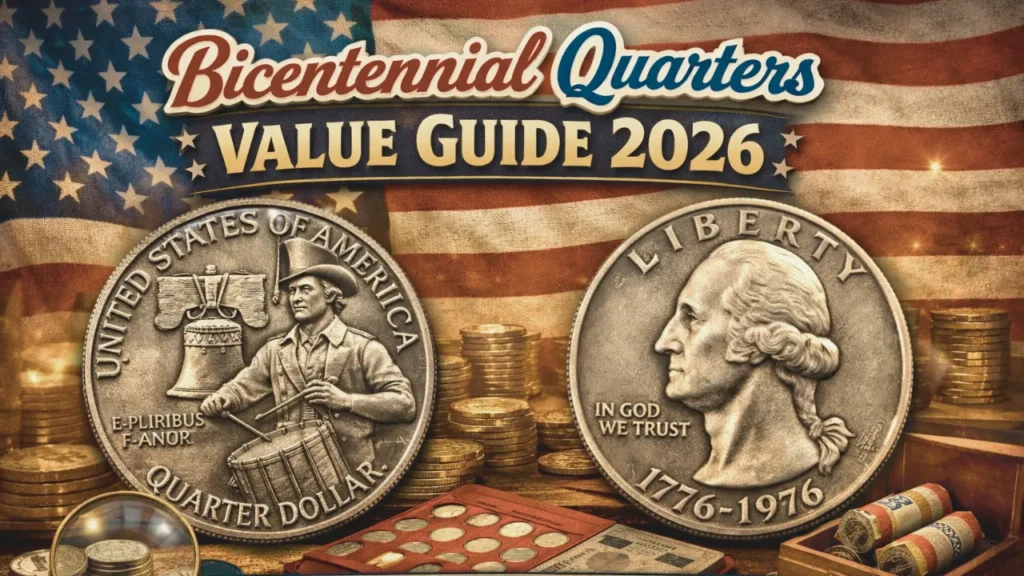
Bicentennial Quarters Value is an important topic for coin collectors and investors throughout the United States. It replaced the regular Washington Quarter design with a distinctive Colonial drummer on the reverse. Today, these coins are highly collected, and their value varies greatly depending on condition, mint mark, and rarity.
Collectors often ask what makes Bicentennial Quarters valuable. Generally, most circulated examples are common and fetch only slightly above face value. However, some uncirculated and proof versions can fetch significantly higher prices. Understanding the market and how grading affects value helps collectors make informed decisions.
Design and Historical Significance
The value of Bicentennial Quarters begins with their unique design and their place in U.S. history. The obverse design features a Revolutionary War drummer on the left, flanked by thirteen stars representing the original colonies. Above George Washington’s profile, the obverse bears the double date “1776–1976.” This design was used on quarters, half dollars, and dollars during the Bicentennial celebration.
Because these coins were produced in large quantities for collectors and circulation, they are a common series. Nevertheless, their historical purpose—celebrating two centuries of American independence—makes them very popular. For many collectors, their value is as much about sentimental and historical value as it is about money, especially when the coins are kept in excellent condition.
Mintage Figures and Why They Matter
The value of Bicentennial Quarters depends on how many were produced. Overall, the U.S. Mint produced millions of Bicentennial quarters in three forms: standard circulation strikes, high-quality uncirculated, and proof sets. The three main mint marks associated with these coins are Philadelphia (no mint mark), Denver (D), and San Francisco (S for proof).
Mintage numbers directly impact supply. Standard circulation coins are very high because they were made to be spent. Uncirculated versions are less common, and San Francisco proof versions are generally the most sought after among collectors. Low supply and high demand drive up value.
The Typical Value of Bicentennial Quarters Today
Most Bicentennial quarters in average circulated condition are worth slightly more than face value. By 2026, standard circulation coins typically sell for around $0.50 to $1.50 per piece at coin shops or online marketplaces. This small premium reflects collector interest but also overall greater availability.
Coins with minimal wear or those graded by a professional service can command higher prices. Uncirculated (MS60–MS65) coins often range from $2 to $15, depending on grade and appearance. Proof coins, especially Deep Cameo Proofs, can fetch $5 to $30 or more if handled very well.
The Impact of Condition and Grading
The value of Bicentennial quarters is largely dependent on condition. The coin grading scale ranges from Poor (P-1) to Perfect Mint State (MS-70). Most circulated coins fall between Good (G-4) and Extremely Fine (XF-45). Higher grades mean the coins have less wear and more original surface detail, which collectors appreciate.
Professional grading services like PCGS and NGC accurately grade coins by sealing them in protective holders. A Bicentennial quarter graded MS67 or higher can command a significant premium over an ungraded coin. Many online auctions show that sharply minted, high-grade quarters easily surpass lower-grade examples in final sale price.
Mistakes and Varieties of Bicentennial Quarters
Some Bicentennial quarters have error features that can increase their value. Common variations include double die obverses, off-center strikes, and strikes with clipped planchets. These flaws are less common than regular strikes, so collectors often pay more for them.
For example, an off-center Bicentennial quarter with an image shift can sell for $10 to $30 or more, depending on the severity. Double die errors, which display doubling on the date or lettering, are particularly coveted and can command even higher prices among specialist collectors.
Silver Clad and Special Editions
In addition to standard copper-nickel quarters, there are also special silver-clad Bicentennial coins for collectors. These were included in special U.S. Mint sets and typically contain 40% silver. Due to their silver content, the value of these editions goes beyond their numismatic appeal.
Until 2026, silver prices fluctuate, but only melt value can provide a solid basis for the value of these coins. Combining the intrinsic value of silver with collector demand, these Bicentennial silver quarters are often considered rare.
Where to Buy or Sell These Quarters
If you’re looking to buy or sell Bicentennial quarters, popular places include local coin dealers, coin shows, and online marketplaces. Coin collection websites help connect buyers and sellers nationwide. Auctions can be especially effective for rare or high-grade pieces.
Before selling, it’s smart to have certain coins professionally graded. Graded coins generally offer greater confidence and a higher price. Similarly, buyers should examine the coins’ characteristics for wear, luster, and any potential flaws before purchasing.
Value Comparison Table
Here’s a snapshot of the typical values for different Bicentennial quarter conditions in 2026:
| Coin Type / Condition | Typical Value Range (USD) |
|---|---|
| Circulated (Common) | $0.50 – $1.50 |
| Uncirculated (MS60–MS63) | $2 – $8 |
| Uncirculated (MS64–MS65) | $8 – $15 |
| Proof (Standard) | $5 – $15 |
| Proof (Deep Cameo) | $15 – $30+ |
| Silver Clad Uncirculated | $6 – $20+ |
| Error Coins (Varies) | $10 – $50+ |
A Final Opinion on Investment Potential
The value of Bicentennial quarters remains modest for common coins but can increase significantly for high-grade and rare varieties. Many collectors start with inexpensive circulated coins and progress to higher quality or error specimens. With the combination of historical interest and stable collector demand in the U.S., these coins will likely continue to be a profitable series for both new and experienced numismatists.