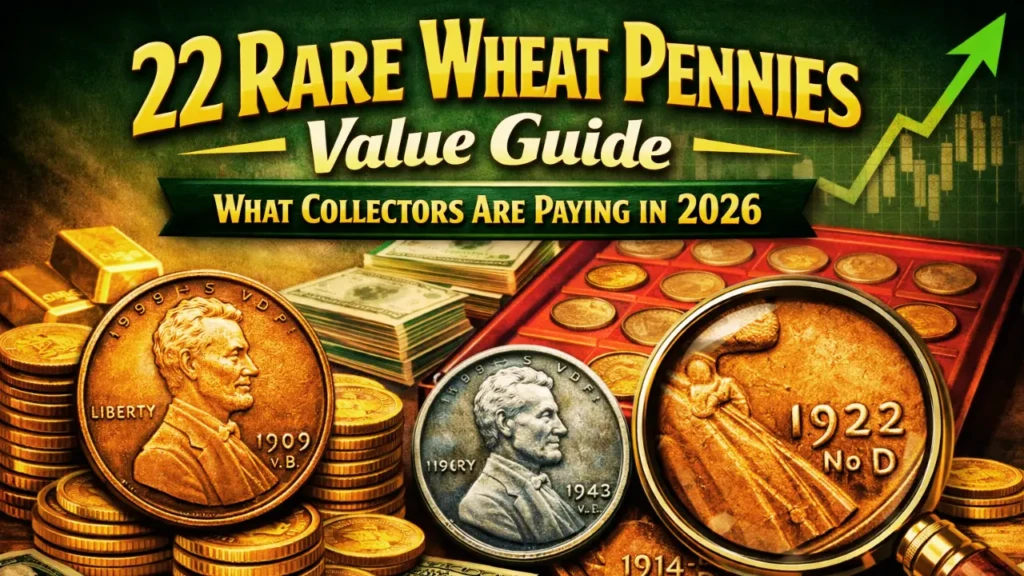
22 Rare Wheat Pennies Value Guide | The value of 22 rare wheat pennies is one of the most hotly debated topics among coin collectors and new investors in the United States. Wheat pennies were minted from 1909 to 1958, and millions were produced, but only a few survive in high grades or with significant errors. These rare coins now command prices far above face value, sometimes reaching thousands of dollars, making them a fascinating collectible. For US coin enthusiasts, it’s crucial to understand these values before buying, selling, or trading any wheat pennies.
History of Wheat Pennies and Importance
The Wheat Penny, officially known as the Lincoln Wheat Cent, was introduced in 1909 to honor Abraham Lincoln’s 100th birthday. Its reverse design features stalks of wheat, earning it the nickname “Wheat Penny.” Collectors cherish this series not only for its historical significance as America’s first portrait coin but also because its large mintage holds some rare gems. Over time, condition, rarity, and mint errors have led some issues to reach premium prices.
Key Factors Affecting the Wheat Penny Value
Several factors influence the value of 22 rare wheat pennies. Condition, or grade, is key; coins graded Mint State (MS) 65 and above by third-party graders like PCGS and NGC command high prices. Mint marks and mintage numbers also play a role. For example, production numbers for coins minted at the San Francisco Mint (S) are sometimes low in specific years, making them even rarer. Errors like doubled dies or repunched mint marks can also significantly increase the value. 22 Rare Wheat Pennies Value Table (by Year and Estimated Price)
The table below shows the 22 most valuable wheat pennies and their estimated retail value in 2026, based on recent auction results and dealer price guides.
| Year & Mint | Approx. Value | Approx. Value (MS65) |
|---|---|---|
| 1909-S VDB | $1,500 | $55,000+ |
| 1914-D | $1,200 | $75,000+ |
| 1922 No D | $900 | $18,000+ |
| 1931-S | $175 | $7,000+ |
| 1916 Doubled Die | $10,000+ | $85,000+ |
| 1955 Doubled Die | $1,000 | $75,000+ |
| 1909-S | $15 | $400+ |
| 1915-S | $25 | $750+ |
| 1936 Doubled Die | $650 | $12,000+ |
| 1943 Copper | $4,500 | $200,000+ |
| 1944 Steel | $150 | $2,000+ |
| 1958 Doubled Die | $300 | $5,000+ |
| 1912 Doubled Die | $1,000 | $9,000+ |
| 1909 VDB | $14 | $550+ |
| 1920 | $50 | $900+ |
| 1925 | $30 | $450+ |
| 1942 Doubled Die | $900 | $16,000+ |
| 1937 Doubled Die | $400 | $8,000+ |
| 1952 Doubled Die | $250 | $3,500+ |
| 1909-D | $90 | $1,200+ |
| 1918/7-S | $800 | $14,000+ |
| 1934-S | $20 | $700+ |
How Grading Affects the 22 Rare Wheat Pennies Value
Grading significantly impacts the value of rare wheat pennies. Professional grading assigns a numerical grade from 1 to 70, with uncirculated coins typically graded MS60 and above. A 1909-S VDB in Good (G4) can fetch a few thousand dollars, but the same coin graded MS65 can sell for over $55,000 at auction. For serious collectors, even small differences in grade can result in thousands of dollar fluctuations in value. Always consult the grade population report before investing.
Common Wheat Penny Faults That Increase Value
Faulty coins are often among the most sought-after coins in the Wheat Penny series. For example, the 1955 Doubled Die shows significant doubling on the obverse and is one of the most famous US errors. Other top mistakes include repunched mintmarks, off-center strikes, and broadstrikes. These varieties are rare because they reflect production errors that were mostly removed during quality control, but they do occasionally find their way into circulation.
Where to Buy and Sell Rare Wheat Pennies in the US
In the United States, collectors and investors typically trade rare wheat pennies through coin shops, national coin shows, reputable online marketplaces, and auctions conducted by firms like Heritage Auctions or Stacks Bowers. For the best deal, always seek professional grading and certification to prove authenticity and condition. Local coin clubs and online forums can also help build trust and information before making a major purchase.
Conclusion
The price of 22 Rare Wheat Pennies reflects a combination of history, scarcity, and collecting passion. With the US coin market changing and interest in tangible assets increasing, rare wheat pennies remain attractive to both experienced numismatists and new collectors. By understanding specific years, types of errors, and the impact of grading, you can make more informed decisions and perhaps find coins worth thousands of dollars that were once just spending money.